 Okdalto
Thoughts on the Chiikawa Movie (Spoiler Warning)
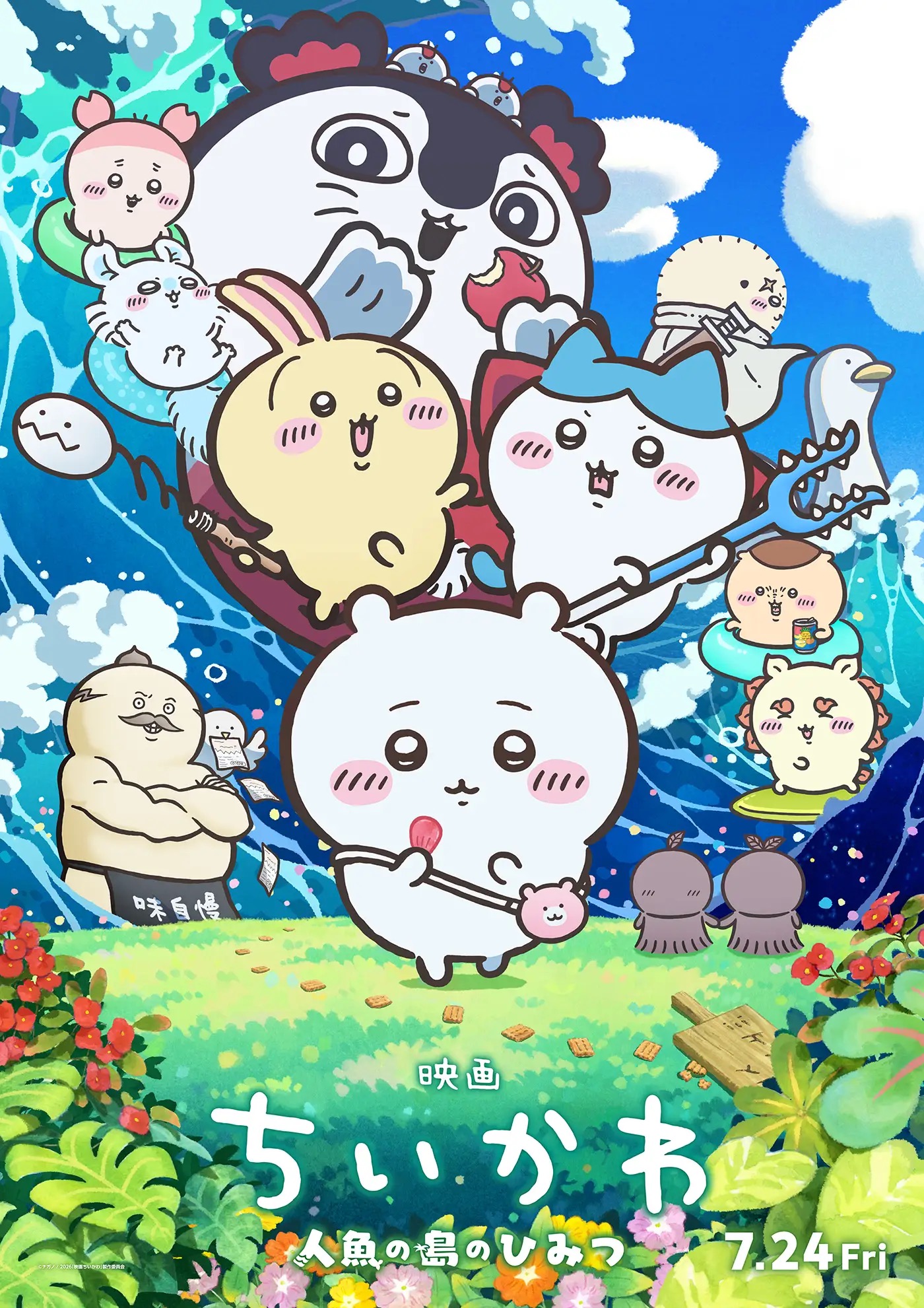
I watched the Chiikawa movie. It was a lot of fun, and the story struck me as deeply Japanese. I felt something similar when I watched Princess Mononoke years ago. It’s in the way these stories look at nature, particularly their attitude toward beings that humans cannot understand or control.
There’s a passage in Laozi’s Tao Te Ching: “Heaven and earth are not benevolent; they treat all things as straw dogs” (天地不仁 以萬物爲芻狗). These straw dogs were objects used in rituals. They were treated with great care during the ceremony, then discarded once it was over. Nature neither particularly loves nor hates humans. It exists and operates regardless of human happiness or misfortune.
The Forest Spirit in Princess Mononoke is like that. It both gives life and takes it away. The forest is beautiful and sacred, but also dangerous. Nature that harms humans isn’t necessarily evil, and nature that gives humans life isn’t necessarily good. Nature exists independently of human moral judgments.
I felt something similar in Chiikawa. The world these cute, fragile beings inhabit contains enormous beings that threaten them. Yet it’s hard to call those beings evil from a human perspective. They have their own desires and ways of surviving. The lives of different beings simply collide. Understanding one side’s circumstances doesn’t make the other side’s suffering disappear.
I wonder whether Japan’s natural environment has something to do with the background of this worldview. Japan has long experienced disasters that humans struggle to control, such as earthquakes, tsunamis, typhoons, and volcanic activity. I know next to nothing about Japan, but I have a vague feeling: might the repeated experience of disasters have influenced the way people see nature?
Natural disasters have no malice. An earthquake doesn’t happen to punish someone. Being a good person doesn’t spare you from harm, and understanding a disaster’s causes doesn’t mean you can prevent it. Because these events happen independently of human morality or will, they create a particular kind of fear.
I feel a similar fear in Japanese horror films such as Ring, Ju-On, and One Missed Call. Sadako’s curse has a cause, but discovering that cause doesn’t solve the problem. The expectation that understanding a dead person’s story and setting their grievances right will end the curse falls apart. The curse doesn’t operate according to a moral order that humans can make sense of. There’s a human tragedy in Sadako’s story, but the curse itself is closer to a phenomenon indifferent to human circumstances.
In Western horror films, identifying the cause of a problem generally leads to its resolution. Understand the villain’s motives, clear up a misunderstanding, and right a wrong, and the world regains its order. Zombies are a prime example. They’re extremely dangerous, but you can sometimes solve the problem by blowing all their damn heads off. Japanese horror films, on the other hand, are a little different. Understanding and resolution remain separate problems. Some things can’t be helped even when you know the cause. They weren’t problems you could solve by persuading or punishing someone in the first place.
In Japanese Shinto, gods aren’t necessarily good or merciful. The sacred presence in various natural phenomena sometimes brings humans abundance and sometimes causes calamity. Humans worship these beings while also fearing them. Loving nature and feeling awe toward it doesn’t lead to denying its dangers. The Buddhist view of impermanence also connects to an attitude of accepting that everything changes and disappears regardless of human will.
What’s interesting is that this worldview doesn’t necessarily lead to a pessimistic conclusion. Chiikawa’s world is dangerous and absurd, but the beings who live in it still eat, work, and spend time with friends. The fact that the world isn’t favorable to them doesn’t contradict living happily within it.
When I think about it, the world we live in isn’t so different. Humans have kept expanding the range of natural principles they can understand and control, yet we still encounter things we can’t explain or solve. When that happens, we look for causes, assign responsibility, and hope the event means something. But not every event has a meaning that humans can accept.
The Japanese sensibility I felt while watching Chiikawa seems to have been close to this attitude. Enormous beings aren’t necessarily evil, and the world itself has no inherent reason to protect small, fragile beings. Different beings are simply living in their own ways. In the process, some get hurt and some survive. It’s a little sad, but that’s also how the world works.
That doesn’t make caring for one another meaningless. If anything, precisely because the world is indifferent to our circumstances, considering one another’s circumstances becomes important. Chiikawa’s friends don’t help one another because the world was designed to make them do so. They simply like one another.
The world has no obligation to be kind to humans. But we can be kind to one another. I hope we can be kind to others, like Chiikawa. And… I hope Chiikawa is happy. Chiikawa, don’t cry~ Stay happy for a long, long time~!
Comments